Speaker 1: Prof. Indah Emilia Wijayanti, Algebra Laboratory, Department of Mathematics, UGM
Speaker 2: Maimun Hasan, ST, MT (CBQA Global)
Date: Tuesday, September 2, 2025
Time: 11.00 WIB – finished
Location: Via Zoom
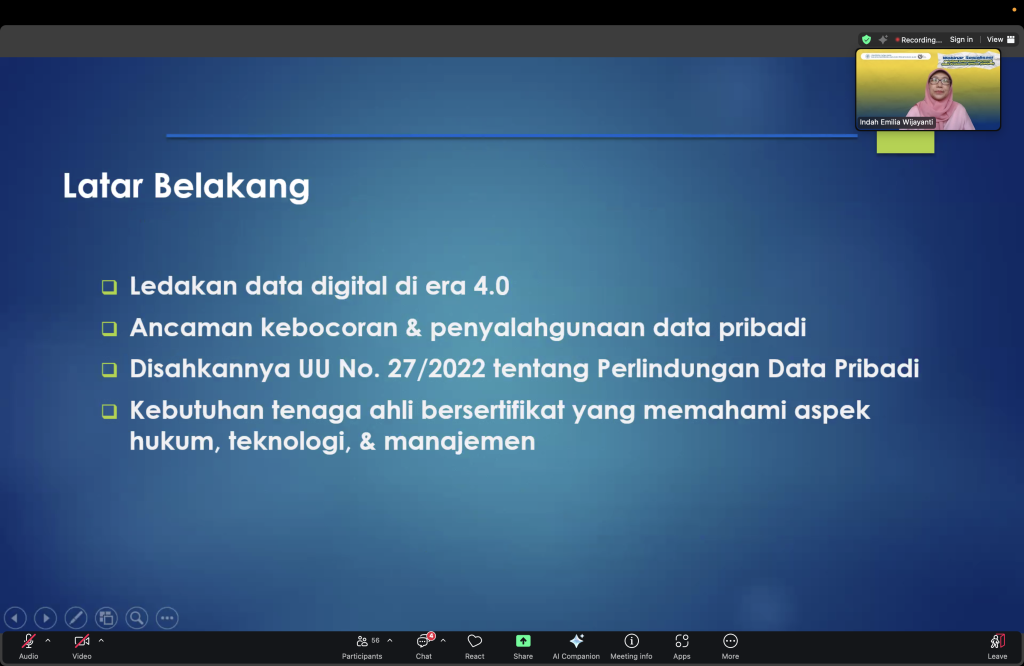
Prof. Indah Emilia Wijayanti from, Algebra Laboratory, Universitas Gadjah Mada, started with an overview of today’s challenges. She pointed out the rapid growth of digital data, the increasing risks of leaks and misuse, and the new legal requirements. She continued to explain that DPOs are guided by clear regulations, including national competency standards and accreditation rules. She added that certification guarantees that DPOs understand not just the law, but also the technology, management, and ethics needed for the job. She further highlighted that certification benefits both individuals and organizations: professionals gain credibility and career opportunities, while companies gain trust, better governance, and reduced legal risks. She also warned that without certified officers, organizations could face data breaches, heavy fines, and loss of reputation. To close, she emphasized UGM’s role in providing research, training, and policy recommendations to strengthen the ecosystem of data protection in Indonesia.
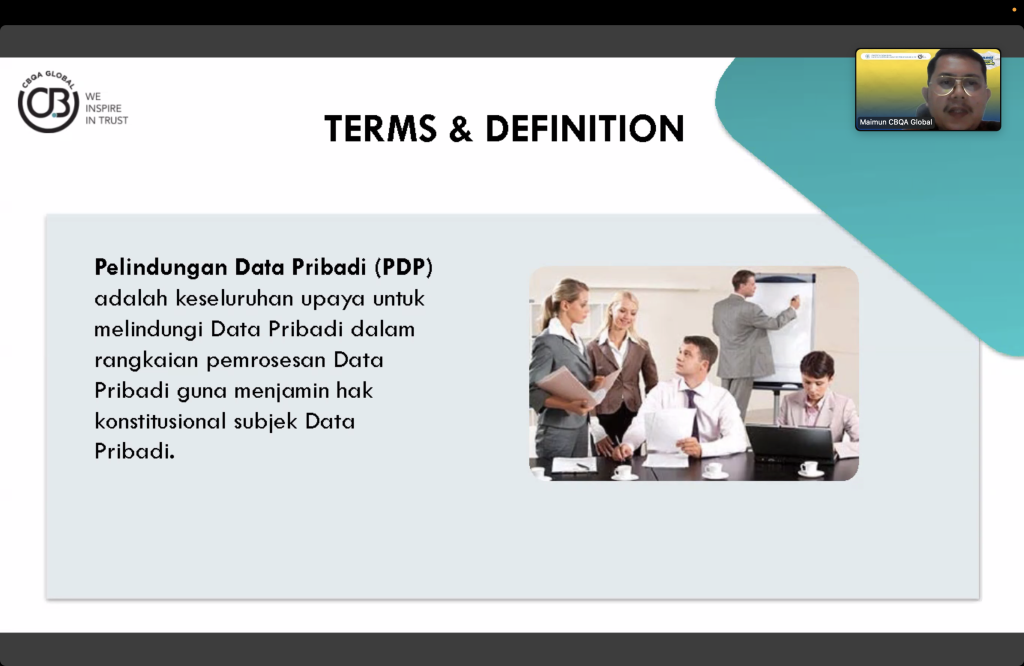
Maimun Hasan, ST, MT from CBQA Global. He started with examples of recent data breaches, such as the Optus case in Australia and the leak of Indonesia’s population data, to show how serious the issue has become. He continued to connect these cases with Indonesia’s constitutional right to privacy, noting that government regulations now require organizations to involve DPOs fully in data management. He added that the role of a DPO is broad: from monitoring compliance and advising management, to communicating with regulators, handling complaints, and maintaining records of data processing. He also stressed that a DPO must have knowledge in law, IT security, and the organization’s sector. The speaker further explained that violations of the law carry strict consequences. Administrative fines can reach 2% of annual revenue, while criminal penalties may include prison sentences of up to six years and fines of up to six billion rupiah. For corporations, the fines may be multiplied ten times.